
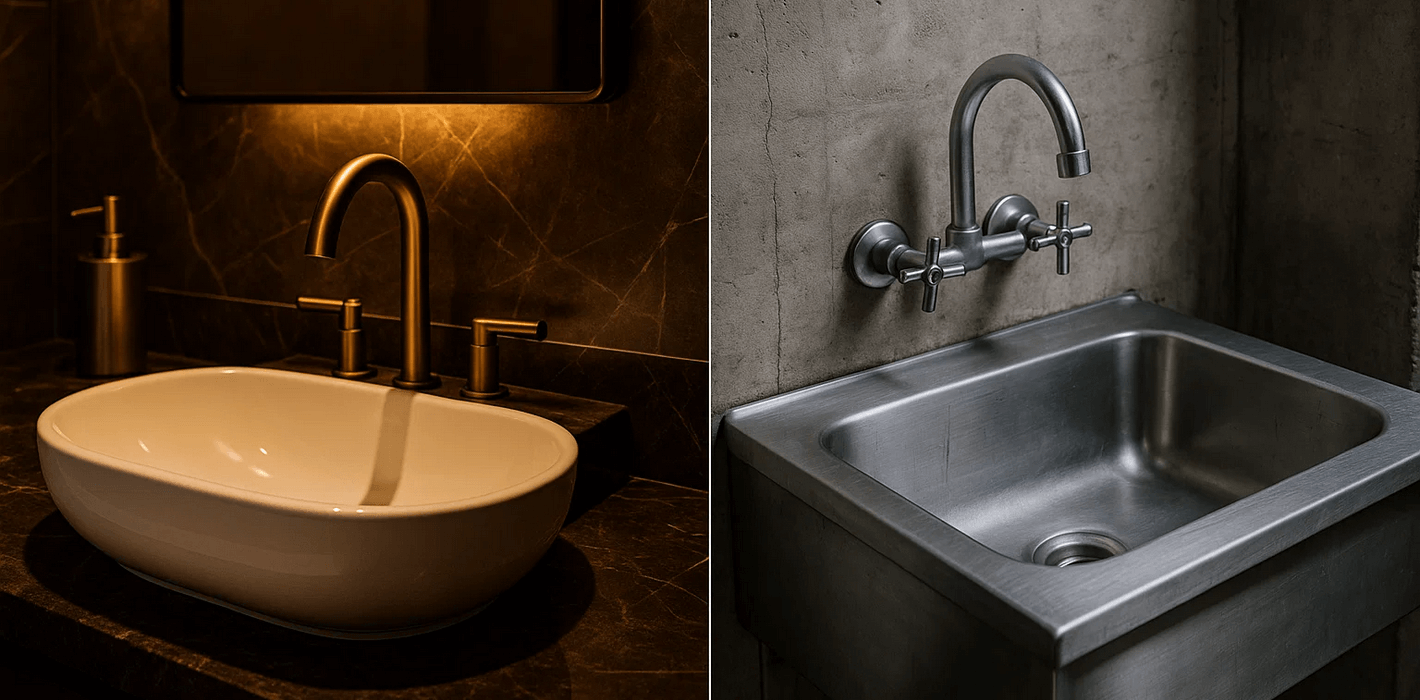
10-Point Comparison: Ceramic vs. Steel Sanitaryware
Choosing the right sanitaryware is not just about looks — it’s about durability, hygiene, cost-efficiency, and long-term performance. Two major players dominate Indian bathrooms: ceramic sanitaryware and stainless steel sanitaryware.
At House of H2O, Ahmedabad’s trusted name in premium bathroom solutions, we help you make the right choice for your lifestyle, needs, and budget. This blog compares ceramic and steel in depth so that your next renovation or purchase is an investment that lasts.
Durability Over Time
Ceramic sanitaryware is known for its long lifespan due to its dense and non-porous surface. It resists scratches and abrasions well. Stainless steel is highly resistant to dents and physical damage, but visible scratches may develop over time. Both are durable, but ceramic edges out slightly for aesthetic longevity.
Maintenance and Cleaning
Ceramic surfaces are smooth, glossy, and non-reactive, making them easy to clean with regular household cleaners. Stainless steel, while hygienic, shows water spots and fingerprints easily. Ceramic wins when it comes to low maintenance in daily use.
Design & Aesthetics
Ceramic products offer a luxurious and timeless appeal, with glossy finishes and varied designs. Steel tends to suit industrial or minimalist styles. If you’re aiming for elegance and a premium feel, ceramic sanitaryware is your go-to.
Cost Factor
Stainless steel sanitaryware is often more cost-effective, especially for large-scale or commercial applications. Ceramic tends to be more expensive upfront, but offers greater visual value and prestige. Consider ceramic for homes, steel for public/commercial restrooms.
Resistance to Stains and Odours
Ceramic’s glazed surface doesn’t retain stains or odours. Steel can hold smells if not cleaned properly. For long-term freshness, ceramic provides better hygiene standards in residential setups.
Thermal Resistance
Ceramic remains cool and doesn’t conduct heat, making it comfortable for daily use. Steel, being a conductor, can feel cold to touch and react to temperature changes. Ceramic wins in comfort and safety.
Corrosion and Rust Resistance
While high-grade stainless steel resists rust, lower grades might corrode over time in humid conditions. Ceramic doesn’t rust or corrode, making it ideal for Indian bathrooms where humidity is high.
Noise Control
Steel basins or commodes can be noisy during water flow. Ceramic absorbs sound better, providing a quieter, more serene bathroom experience.
Environmental Impact
Both materials are recyclable, but ceramic has a longer lifecycle and doesn’t degrade as quickly under harsh chemicals. It’s a more eco-friendly and sustainable choice for homes.
Weight and Installation
Ceramic fixtures are heavier and may require professional installation. Steel, being lightweight, is easier to handle and ideal for modular fittings. If you’re renovating with structural limits, consider steel; otherwise, ceramic remains the premium choice.
Conclusion: Which One Lasts Longer?
While both ceramic and steel sanitaryware have their merits, ceramic sanitaryware proves to be the better long-term investment for homes seeking aesthetic appeal, comfort, and hygiene. Stainless steel has its place in commercial, industrial, and utility spaces. At House of H2O, we recommend ceramic for most modern Indian homes due to its proven durability and style.
Ready to upgrade to timeless ceramic elegance?
Visit our showroom in Ahmedabad or explore online.
Call now for personalized bathroom design consultation.
Elevate your bathroom with House of H2O — Where Quality Meets Wellness.